
Articles
Why Are Your Glasses Cloudy After the Dishwasher? Causes, Fixes, and How Rinse Aid Helps

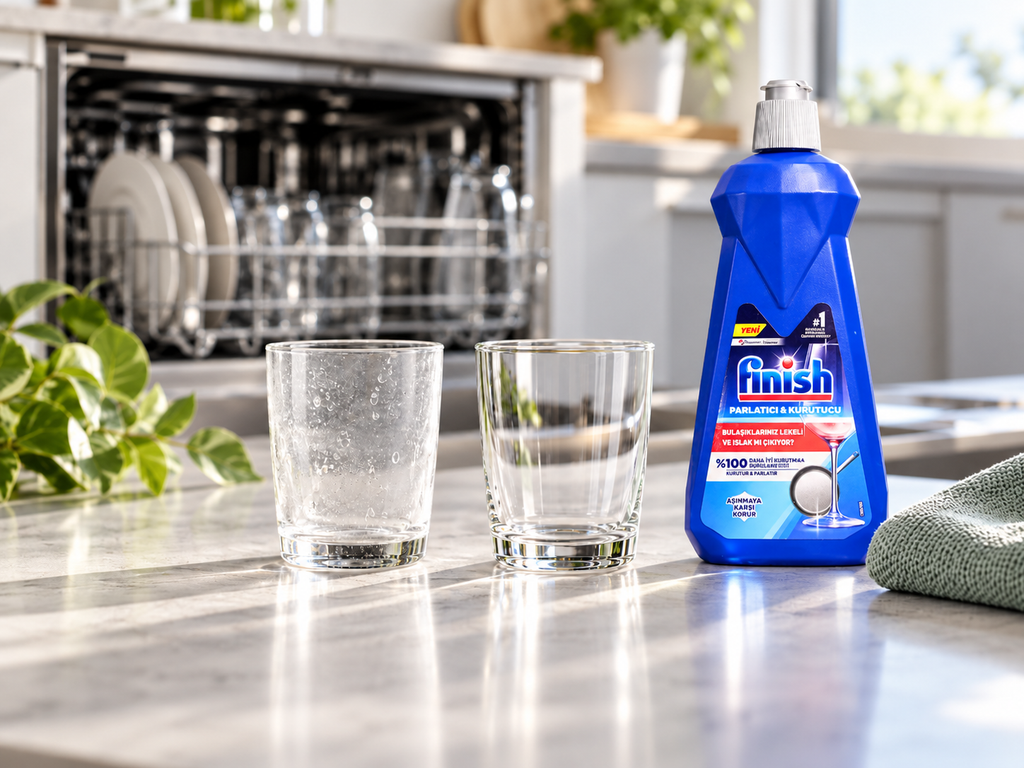
The dishwasher cycle is finished. Your plates look clean, but the glasses come out covered in water spots or with a dull, cloudy appearance.
Sound familiar?
Cloudy glasses after a dishwasher cycle do not necessarily mean that your dishwasher failed to clean them.
The appearance can be caused by several factors, from minerals in the water and the drying process to detergent residue and even the condition of the glass itself.
One product designed to support a better final result is dishwasher rinse aid.
But what exactly causes cloudy glassware, and what does rinse aid actually do?
Why Do Glasses Look Cloudy After the Dishwasher?
Water contains minerals.
When droplets remain on glassware after the final rinse and eventually evaporate, some of those minerals can stay behind on the surface.
The result can be visible water spots, streaks, or a thin film that makes otherwise clean glassware appear dull.
This issue may be more noticeable in areas with hard water, where the water contains higher levels of minerals.
Dishwasher settings, detergent, loading habits, and drying performance can also affect the final appearance of your glassware.
So while a glass may technically be clean, it may not always look as crystal clear as expected.
Water Spots and Cloudy Glassware Aren’t Always the Same Problem
Water spots typically appear as individual marks where droplets have dried on the glass.
Cloudiness, on the other hand, can appear as a hazy or milky-looking film covering part or all of the surface.
Sometimes this film comes from mineral deposits and can still be removed.
However, permanently cloudy glassware may be experiencing glass etching.
Etching involves changes to the actual surface of the glass and can develop over time due to factors such as high temperatures, water conditions, detergent levels, and repeated washing.
One way to tell the difference is whether the cloudy film can be removed. If the haze comes off during cleaning, mineral deposits are more likely to be the cause. If the glass remains dull, the surface itself may have been etched.
That is why preventing residue and using the dishwasher correctly can be just as important as cleaning the glass afterwards.
What Is Dishwasher Rinse Aid?
Despite the name, rinse aid is not another type of dishwasher detergent.
Dishwasher detergent does most of its work during the main wash, helping remove food residue, grease, and stains.
Rinse aid works during the final rinse stage.
It helps water spread and run off the surface of dishes and glassware more effectively instead of remaining behind as individual droplets.
When less water stays on the surface to dry naturally, there is less opportunity for visible water spots to develop.
This can help glassware come out looking clearer and shinier while also supporting the dishwasher’s drying process.
Do You Still Need Rinse Aid If You Use Dishwasher Tablets?
Some dishwasher tablets combine several functions into a single product, which can make it seem as though a separate rinse aid is unnecessary.
However, detergent and rinse aid perform different jobs during the dishwasher cycle.
Detergent focuses primarily on cleaning during the main wash.
Rinse aid is dispensed later, during the final rinse, where it supports water runoff and drying.
If glasses frequently come out spotted, remain very wet after the cycle, or simply do not look as sparkling as expected, adding rinse aid separately may improve the overall result.
How Do You Use Finish Rinse Aid?
Most dishwashers have a dedicated rinse aid reservoir located on the inside of the dishwasher door, usually near the detergent dispenser.
Pour Finish Rinse Aid into this compartment according to the instructions for your dishwasher.
Once the reservoir is filled, the machine automatically releases the appropriate amount during the rinse stage. There is no need to pour rinse aid directly into the dishwasher every time you run a cycle.
Check your dishwasher’s rinse aid indicator periodically and refill the reservoir when needed.
Because dishwasher designs and settings can vary, always follow the instructions on the product packaging and your dishwasher manufacturer’s manual.
What If Your Glasses Are Still Cloudy?
Rinse aid can help with spotting and drying, but cloudy glassware can have more than one cause.
Water quality is worth considering, particularly if you live in an area with hard water.
For dishwashers equipped with a water-softening system, dishwasher salt can help manage the minerals responsible for limescale and some types of visible residue.
How the dishwasher is loaded also matters.
Avoid placing glasses so close together that they touch. Make sure nothing prevents the spray arms from rotating freely and reaching the entire load.
Regular maintenance is another important part of consistent dishwasher performance, as grease, mineral deposits, and residue can gradually build up inside the machine.
Better results often come from the entire dishwasher routine rather than one product alone.
Detergent, Rinse Aid, and Dishwasher Salt Do Different Jobs
It is easy to assume that all dishwasher products perform essentially the same function.
They do not.
Dishwasher detergent is primarily responsible for removing food, grease, and stains during the wash.
Rinse aid supports the final rinsing and drying process, helping minimise water spots and improve shine.
Dishwasher salt, when used with machines that have a built-in water softening system, helps manage hard water minerals and limescale.
Using each product for its intended purpose can help create a more complete dishwashing routine.
Clean Glasses Should Look Clean Too
A good dishwasher result is about more than removing food from plates.
The finish matters as well.
If glasses regularly come out covered in water spots or looking dull, take a closer look at your water conditions, loading habits, detergent, dishwasher maintenance, and whether the rinse aid reservoir is filled.
Adding Finish Rinse Aid to your routine can help support better drying, reduce visible water spots, and leave your glassware looking clearer and shinier after every wash.
Explore Finish Rinse Aid and other dishwasher care essentials from Green Light Supply to build a more complete dishwashing routine for your home.
Kenapa Gelas Masih Kusam Setelah Dicuci di Dishwasher? Kenali Penyebab dan Fungsi Rinse Aid
Dishwasher sudah selesai bekerja. Piring terlihat bersih, tetapi ketika gelas dikeluarkan, masih ada bercak putih, water spots, atau permukaannya terlihat kusam.
Kalau pernah mengalami hal ini, bukan berarti dishwasher tidak membersihkan dengan baik.
Gelas yang terlihat cloudy atau kurang berkilau setelah dicuci bisa disebabkan oleh beberapa hal, mulai dari kandungan mineral di dalam air, proses pengeringan, hingga kondisi permukaan gelas itu sendiri.
Salah satu produk yang sering digunakan untuk membantu mengatasi masalah tersebut adalah dishwasher rinse aid.
Lalu, sebenarnya apa yang menyebabkan gelas menjadi kusam dan bagaimana rinse aid bekerja?
Kenapa Gelas Bisa Terlihat Kusam Setelah Dishwasher?
Gelas yang baru selesai dicuci seharusnya terlihat bersih dan jernih. Namun, air yang digunakan selama proses pencucian mengandung mineral yang dapat tertinggal ketika air mengering.
Saat tetesan air menguap dari permukaan gelas, mineral tersebut dapat meninggalkan bekas berupa bercak atau lapisan tipis yang membuat kaca terlihat kurang jernih.
Kondisi ini lebih mudah terjadi pada area dengan hard water atau air yang memiliki kandungan mineral relatif tinggi.
Selain mineral, sisa detergent, pengaturan dishwasher, cara menata gelas, hingga proses drying juga dapat memengaruhi hasil akhirnya.
Karena itu, gelas yang terlihat kusam setelah dishwasher belum tentu masih “kotor”.
Water Spots dan Cloudy Glass Tidak Selalu Sama
Water spots biasanya terlihat seperti bercak kecil yang muncul setelah tetesan air mengering pada permukaan kaca.
Cloudiness atau tampilan berkabut dapat terlihat seperti lapisan putih tipis yang menutupi sebagian atau seluruh permukaan gelas.
Dalam beberapa kasus, lapisan tersebut berasal dari mineral yang tertinggal sehingga masih dapat dibersihkan.
Namun, ada juga kondisi yang disebut glass etching, yaitu perubahan permanen pada permukaan kaca akibat kombinasi berbagai faktor seperti temperatur tinggi, karakteristik air, detergent, dan penggunaan jangka panjang.
Cara sederhana untuk membedakannya adalah dengan melihat apakah lapisan kusam dapat dibersihkan. Jika residu atau lapisan mineral dapat hilang, masalahnya kemungkinan berasal dari deposit pada permukaan. Jika kaca tetap terlihat buram meskipun sudah dibersihkan, permukaannya mungkin telah mengalami etching.
Artinya, pencegahan menjadi bagian penting dari perawatan glassware yang rutin masuk ke dishwasher.
Apa Itu Dishwasher Rinse Aid?
Walaupun namanya mengandung kata “rinse”, rinse aid bukan detergent tambahan.
Detergent bekerja terutama untuk membantu mengangkat grease, sisa makanan, dan kotoran selama proses pencucian.
Sementara itu, rinse aid bekerja pada tahap pembilasan akhir.
Rinse aid membantu air menyebar dan mengalir dari permukaan peralatan makan dengan lebih efektif dibandingkan membentuk tetesan-tetesan besar yang tertinggal di permukaan.
Semakin sedikit air yang tertinggal dan mengering secara alami di atas gelas, semakin kecil kemungkinan terbentuknya water spots.
Hasil akhirnya adalah glassware yang dapat terlihat lebih jernih, lebih berkilau, dan lebih siap digunakan setelah dishwasher selesai bekerja.
Apakah Rinse Aid Tetap Dibutuhkan Jika Sudah Menggunakan Dishwasher Tablet?
Ini salah satu pertanyaan yang cukup sering muncul.
Beberapa dishwasher tablet memang memiliki formula dengan beberapa fungsi sekaligus. Namun, detergent dan rinse aid tetap memiliki peran yang berbeda dalam dishwasher cycle.
Detergent berfokus pada proses cleaning, sementara rinse aid dilepaskan pada tahap final rinse untuk mendukung proses rinsing dan drying.
Karena itu, jika gelas masih memiliki water spots, terasa terlalu basah setelah cycle selesai, atau hasil akhirnya belum terlihat cukup sparkling, menggunakan rinse aid secara terpisah dapat menjadi bagian dari dishwasher routine.
Bagaimana Cara Menggunakan Finish Rinse Aid?
Sebagian besar dishwasher memiliki kompartemen khusus untuk rinse aid yang biasanya berada di bagian dalam pintu mesin, dekat dengan detergent dispenser.
Finish Rinse Aid cukup dituangkan ke dalam reservoir tersebut sesuai petunjuk dishwasher yang digunakan.
Setelah reservoir terisi, dishwasher akan melepaskan rinse aid secara otomatis pada tahap pembilasan yang sesuai. Jadi, rinse aid tidak perlu dituangkan langsung ke dalam mesin setiap kali mencuci.
Periksa indikator rinse aid pada dishwasher secara berkala dan isi kembali saat levelnya sudah rendah.
Selalu ikuti petunjuk penggunaan pada produk dan manual dishwasher karena desain serta pengaturan setiap mesin dapat berbeda.
Kalau Sudah Pakai Rinse Aid tetapi Gelas Masih Kusam?
Rinse aid dapat membantu mengurangi water spots dan mendukung proses drying, tetapi gelas kusam tidak selalu disebabkan oleh satu faktor.
Perhatikan juga kondisi air yang digunakan di rumah.
Jika air memiliki kandungan mineral tinggi, dishwasher salt dapat membantu pada dishwasher yang memiliki sistem water softener. Penggunaan detergent yang tepat, penataan glassware yang benar, serta kondisi dishwasher yang bersih juga berpengaruh terhadap hasil pencucian.
Hindari meletakkan gelas terlalu rapat hingga saling bersentuhan. Pastikan spray arm dapat bergerak dengan bebas sehingga air dapat menjangkau seluruh load.
Dishwasher juga perlu dibersihkan secara berkala karena grease, mineral, dan residue dapat menumpuk pada bagian dalam mesin dari waktu ke waktu.
Dengan kata lain, hasil dishwasher terbaik berasal dari kombinasi produk dan kebiasaan penggunaan yang tepat.
Detergent, Rinse Aid, dan Dishwasher Salt Punya Fungsi Berbeda
Ketiga produk ini sering dianggap melakukan pekerjaan yang sama, padahal sebenarnya memiliki fungsi masing-masing.
Dishwasher detergent berperan dalam proses utama membersihkan grease, sisa makanan, dan noda.
Rinse aid membantu pada proses pembilasan dan pengeringan sehingga mengurangi water spots dan membantu menghasilkan tampilan yang lebih berkilau.
Sementara dishwasher salt, pada mesin yang memiliki sistem water softener, membantu menangani mineral dalam hard water dan mengurangi pembentukan limescale.
Menggunakan produk sesuai fungsinya dapat memberikan hasil yang lebih optimal dibandingkan mengandalkan satu produk untuk seluruh proses pencucian.
Gelas Bersih Seharusnya Juga Terlihat Bersih
Dishwasher bukan hanya soal menghilangkan sisa makanan dari piring.
Hasil akhir juga penting.
Kalau gelas masih terlihat penuh water spots atau kurang berkilau setelah cycle selesai, coba perhatikan kondisi air, cara menata glassware, detergent yang digunakan, serta apakah rinse aid reservoir sudah terisi.
Finish Rinse Aid dapat menjadi tambahan sederhana dalam dishwasher routine untuk membantu proses drying, mengurangi bekas air, dan menjaga hasil akhir glassware terlihat lebih jernih dan berkilau.
Temukan Finish Rinse Aid dan kebutuhan dishwasher lainnya di Green Light Supply untuk melengkapi rutinitas pencucian di rumah.